Embarking on a yoga journey can be a wonderfully transformative experience, and discovering easy ways to practice yoga at home makes it incredibly accessible for everyone, regardless of experience level or busy schedules. Yoga, a practice that connects the mind, body, and spirit, doesn’t require a fancy studio or expensive gear to begin. In fact, your living room, a quiet corner, or even your backyard can become your personal sanctuary for movement, mindfulness, and relaxation. This comprehensive guide will walk you through everything you need to know to cultivate a fulfilling and sustainable home yoga practice, helping you find peace, strength, and flexibility on your own terms.
Why Home Yoga is a Game-Changer for Everyone
The idea of practicing yoga at home offers a unique set of advantages that can make it appealing to many, especially beginners or those with demanding lifestyles. It’s more than just convenience; it’s about creating a personal, judgment-free space where you can explore your body and breath at your own pace.
- Unparalleled Flexibility: Life is unpredictable. With home yoga, you dictate the schedule. Whether it’s a quick 15-minute stretch before work, a midday energizer, or a calming evening session, you can fit yoga into your day whenever it suits you best. This flexibility is one of the most appealing easy ways to practice yoga at home.
- Privacy and Comfort: For many, the thought of practicing in a group setting can be intimidating. Home yoga provides a private environment where you can try new poses, wobble, and even fall without feeling self-conscious. You can wear what you want, play your own music, and truly make the experience your own.
- Cost-Effective: While studio memberships can be wonderful, they can also be a significant investment. Practicing yoga at home eliminates membership fees, travel costs, and the need for specialized attire. All you truly need is a comfortable space.
- Personalized Practice: At home, you can focus on what your body needs most. Want to spend more time on hip openers? Go for it. Feeling tired and just want a restorative session? That’s entirely up to you. This freedom to customize is a core benefit of finding easy ways to practice yoga at home.
- Stress Reduction and Well-being: Regular physical activity, including yoga, is known to support overall well-being. The combination of movement, breathwork, and mindfulness inherent in yoga can help manage everyday stress and promote a sense of calm. (Source: WebMD – Yoga for Stress Relief)
Essential Steps to Start Your Home Yoga Journey
Getting started with home yoga is simpler than you might think. With a few basic preparations and a positive mindset, you’ll be ready to unroll your mat and begin.
Setting Up Your Sacred Space
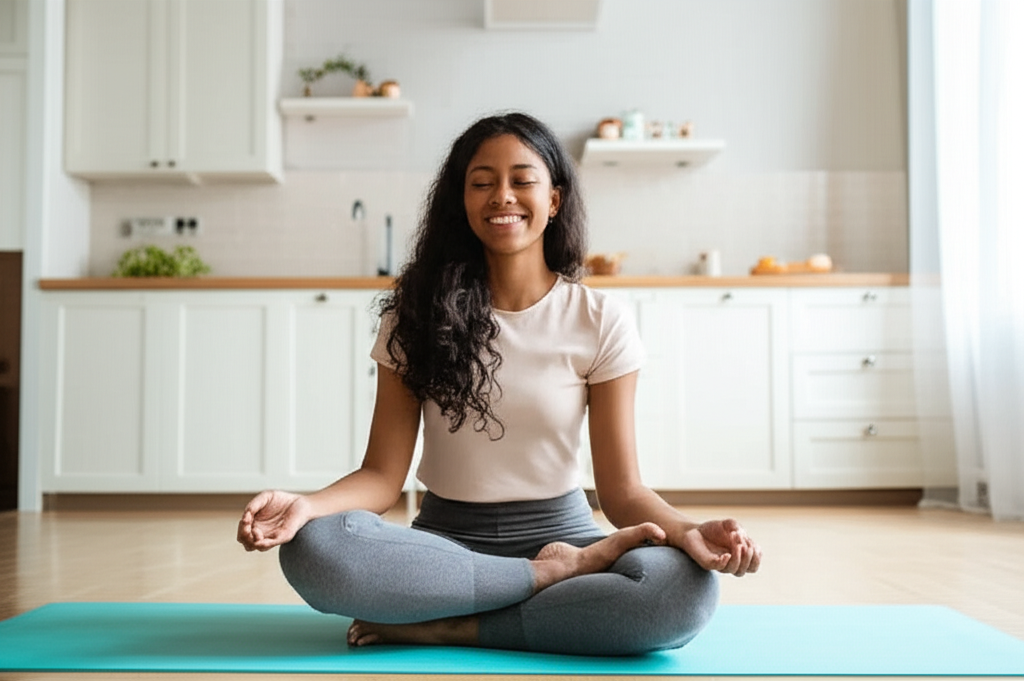
You don’t need a dedicated yoga room to find easy ways to practice yoga at home. A small, clear area is all it takes.
- Find a Quiet Corner: Choose a spot in your home where you can minimize distractions. It could be a corner of your bedroom, living room, or even a sunlit patio.
- Declutter and Cleanse: A tidy space can help create a tidy mind. Clear away any clutter from your practice area. You might even light a candle or diffuse essential oils to enhance the atmosphere.
- Basic Props: While not strictly necessary, a yoga mat can provide cushioning and grip. If you don’t have one, a carpeted floor or even a large towel can work. Other props like cushions, blankets, or even thick books can serve as supports for various poses. Remember, the goal is to find easy ways to practice yoga at home, so don’t overthink the equipment.
Finding Your Perfect Practice Style
The beauty of home yoga is the abundance of resources available to guide you.
- Online Resources are Your Friends: YouTube is a treasure trove of free yoga classes for all levels. Search for "beginner yoga," "gentle yoga," or "restorative yoga." Many yoga studios and instructors also offer online classes or subscriptions. Apps like Down Dog, Yoga for Beginners, or Glo can also provide structured sequences.
- Explore Different Styles: While you’re starting, focus on gentle and accessible styles.
- Hatha Yoga: Often slower-paced, focusing on holding poses for several breaths, making it excellent for beginners to learn alignment.
- Restorative Yoga: Uses props to support the body in gentle stretches, promoting deep relaxation.
- Yin Yoga: Holds poses for longer durations (3-5 minutes), targeting connective tissues and promoting flexibility.
- Vinyasa Flow (Beginner-friendly versions): Connects poses with breath in a more fluid sequence. If you’re looking for easy ways to practice yoga at home with a bit more movement, look for "slow flow" or "beginner vinyasa."
Listen to Your Body – The Golden Rule
This is perhaps the most crucial advice for anyone seeking easy ways to practice yoga at home.
- Honor Your Limits: Yoga is not about forcing your body into pretzel-like shapes. It’s about exploring your body’s capabilities with kindness and curiosity. Never push through pain. If something feels uncomfortable, ease out of the pose or modify it.
- Breathe Deeply: Your breath is your anchor in yoga. Focus on deep, steady breaths (inhaling through the nose, exhaling through the nose or mouth). This helps calm the nervous system and deepen your connection to the present moment.
7 Simple Poses for Beginners to Practice at Home
Here are seven fundamental and incredibly easy ways to practice yoga at home, perfect for building your foundation. Remember to move slowly and mindfully, paying attention to your breath in each pose.
-
Mountain Pose (Tadasana):
- How to do it: Stand tall with your feet hip-width apart or together, toes spread. Ground through all four corners of your feet. Engage your leg muscles, lift your kneecaps, and gently tuck your tailbone. Roll your shoulders back and down, palms facing forward. Gaze straight ahead.
- What it can help with: Establishing proper alignment, grounding, and balance. It’s the foundation for many standing poses.
-
Child’s Pose (Balasana):
- How to do it: Kneel on your mat, big toes touching, knees wide apart (or together for a deeper stretch). Sit your hips back towards your heels. Fold forward, resting your torso between or on your thighs. Extend your arms forward or rest them alongside your body, palms up. Rest your forehead on the mat.
- What it can help with: Gentle stretching of the hips, thighs, and ankles. It’s a wonderful resting pose that can help calm the brain and relieve stress and fatigue.
-
Cat-Cow Stretch (Marjaryasana-Bitilasana):
- How to do it: Start on your hands and knees, wrists under shoulders, knees under hips.
- Cat (Exhale): Round your spine towards the ceiling, dropping your head and tucking your tailbone.
- Cow (Inhale): Arch your back, lifting your tailbone and chest, gazing slightly upward.
- What it can help with: Warming up the spine, improving flexibility, and coordinating breath with movement. It’s one of the most effective and easy ways to practice yoga at home for spinal health.
- How to do it: Start on your hands and knees, wrists under shoulders, knees under hips.
-
Downward-Facing Dog (Adho Mukha Svanasana):
- How to do it: From hands and knees, tuck your toes, lift your hips high towards the ceiling, forming an inverted V-shape with your body. Spread your fingers wide, pressing firmly through your palms. Keep a slight bend in your knees if your hamstrings are tight, focusing on lengthening your spine. Let your head hang heavy.
- What it can help with: Stretching the shoulders, hamstrings, calves, and lengthening the spine. It can also help strengthen the arms and legs.
-
Tree Pose (Vrksasana):
- How to do it: Stand in Mountain Pose. Shift your weight to your left foot. Bring the sole of your right foot to your inner left ankle (toes on the floor for balance), inner calf, or inner thigh (avoid placing it directly on the knee). Bring your hands to prayer at your chest or extend them overhead.
- What it can help with: Improving balance, stability, and concentration. It can also help strengthen the ankles and thighs. Don’t worry if you wobble – that’s part of the practice!
-
Seated Forward Bend (Paschimottanasana):
- How to do it: Sit on your mat with your legs extended straight out in front of you, feet flexed, toes pointing up. Sit tall, then hinge from your hips, reaching your hands towards your shins, ankles, or feet. Keep your spine long, avoiding rounding your back.
- What it can help with: Stretching the hamstrings, spine, and shoulders. It can also help calm the brain and may support stress relief.
-
Corpse Pose (Savasana):
- How to do it: Lie flat on your back, legs slightly wider than hip-width apart, feet flopping naturally to the sides. Arms are alongside your body, palms facing up, slightly away from your torso. Close your eyes and allow your entire body to relax completely into the floor.
- What it can help with: Deep relaxation, integrating the benefits of your practice, and calming the nervous system. It’s a crucial pose that often gets overlooked but is one of the most important and easy ways to practice yoga at home for mental restoration.
Incorporating Mindfulness and Breathwork
Yoga isn’t just about physical poses; it’s a holistic practice that includes mindfulness and breath control, known as Pranayama. These elements are integral to making your home practice truly transformative.
The Power of Pranayama (Breath Control)
Simple breath exercises can be incredibly powerful tools for managing stress and enhancing focus.
- Deep Belly Breathing: Lie down or sit comfortably. Place one hand on your chest and the other on your belly. As you inhale, feel your belly rise, and as you exhale, feel it fall. Focus on making your breaths slow, smooth, and deep. This simple technique is known to help calm the nervous system.
- Alternate Nostril Breathing (Nadi Shodhana): A slightly more advanced but still accessible technique. Sit comfortably. Close your right nostril with your right thumb and inhale slowly through your left nostril. Then close your left nostril with your ring finger, release your thumb, and exhale through your right nostril. Inhale through your right, then close it and exhale through your left. Continue alternating. This practice is known to balance the hemispheres of the brain and can help reduce anxiety.
Short Meditations for Inner Peace
Even a few minutes of meditation can make a big difference.
- Body Scan Meditation: Lie down in Savasana. Bring your attention to your feet, noticing any sensations. Slowly move your awareness up through your body, limb by limb, relaxing each part as you go.
- Mindful Breathing: Simply sit comfortably and focus your entire attention on the sensation of your breath entering and leaving your body. When your mind wanders (and it will!), gently guide it back to your breath.
These practices are fantastic and easy ways to practice yoga at home that extend beyond physical postures, offering profound mental benefits.
Building a Sustainable Home Yoga Routine
Consistency is key when it comes to any new habit, and yoga is no exception. Here’s how to build a routine that sticks.
Start Small, Stay Consistent
- Set Realistic Goals: Don’t aim for an hour-long practice every day from the start. Begin with 10-15 minutes, three to four times a week. Even 5 minutes of mindful movement is beneficial.
- Schedule It: Treat your yoga practice like an important appointment. Block out time in your calendar. This helps establish it as a priority.
- Integrate It: Look for easy ways to practice yoga at home by integrating it into your existing routine. Maybe it’s after your morning coffee or before bed.
Embrace the Journey, Not Just the Destination
- Patience and Self-Compassion: There will be days when you feel strong and flexible, and days when you feel stiff or unmotivated. That’s perfectly normal. Approach your practice with kindness and without judgment.
- Celebrate Small Victories: Notice the subtle changes – perhaps you can hold a pose a little longer, or you feel calmer after your session. Acknowledge your progress.
Overcoming Common Hurdles
- Lack of Motivation: On days you don’t feel like practicing, commit to just 5 minutes. Often, once you start, you’ll want to continue. Online communities or a virtual "yoga buddy" can also provide encouragement.
- Distractions: Turn off your phone, inform family members you need quiet time, or put on headphones. Creating boundaries around your practice time is crucial.
- Feeling Stuck: If you feel like you’re not progressing, try a new online class, explore a different style, or invest in a beginner’s yoga book. There are always new easy ways to practice yoga at home to discover.
Safety First: Important Considerations
While yoga is generally safe, it’s vital to prioritize your well-being, especially when practicing without an instructor present.
- Listen to Your Body (Again!): This cannot be stressed enough. If a pose causes sharp pain, stop immediately. Discomfort is normal when stretching, but pain is your body’s signal to back off.
- Modifications are Your Friends: Don’t feel pressured to perform a pose exactly as demonstrated. Use props, bend your knees, or reduce your range of motion to make the pose accessible and safe for your body.
- Consult a Professional: If you have any pre-existing health conditions, injuries, or concerns, it’s always wise to consult with a healthcare professional before starting any new exercise regimen, including yoga. They can provide personalized advice to ensure your practice is safe and beneficial. (Source: Mayo Clinic – Yoga: Fight stress and find serenity)
- Stay Hydrated: Drink plenty of water throughout the day, especially before and after your practice.
Conclusion
Embracing easy ways to practice yoga at home is a powerful step towards cultivating greater physical well-being, mental clarity, and emotional balance. By setting up a comfortable space, exploring beginner-friendly poses, incorporating breathwork, and building a consistent routine, you can unlock the many benefits of yoga without ever leaving your house. Remember to be patient, kind to yourself, and listen to your body throughout your journey. Your mat, wherever it may be, is a place for discovery, growth, and peace. So, unroll your mat today and begin your wonderful home yoga adventure – your mind and body will thank you for it!