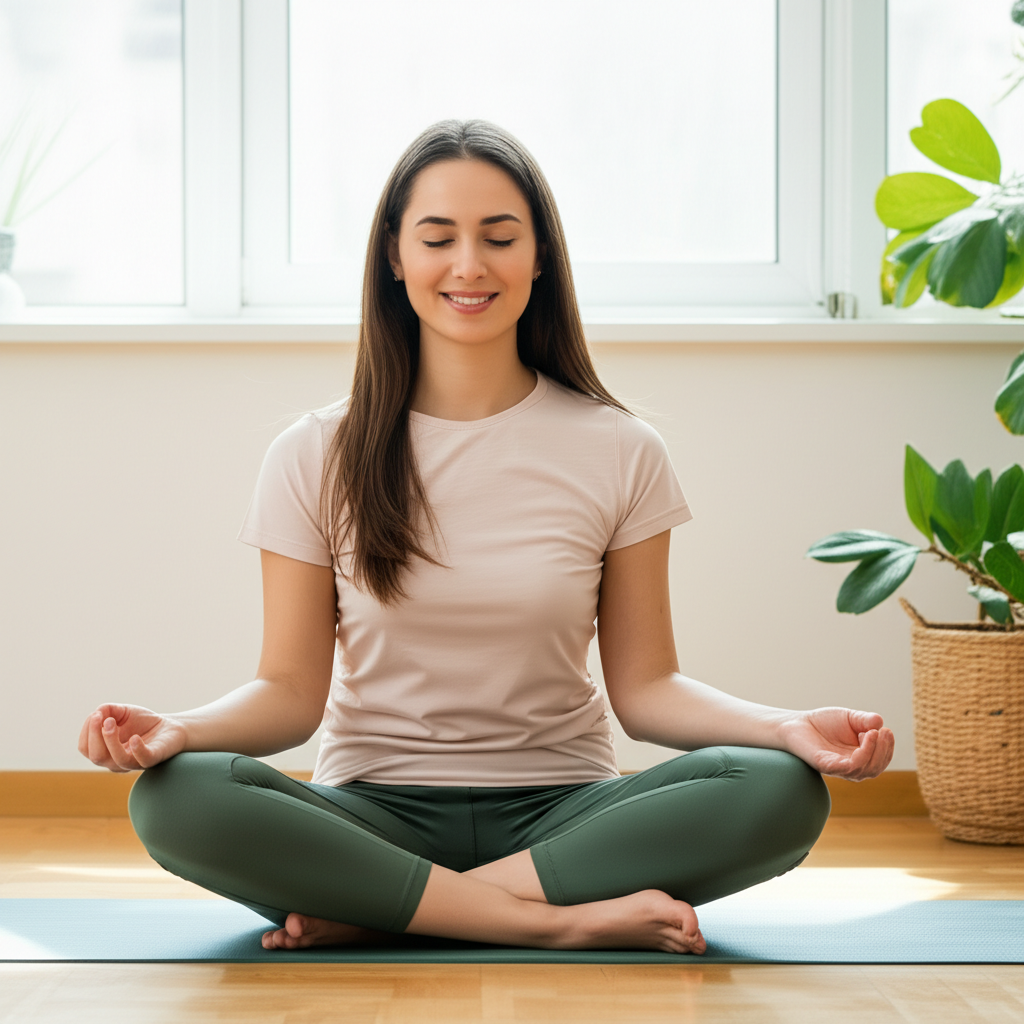
Embarking on a journey of inner peace and calm doesn’t require a trip to a faraway ashram or expensive equipment. In fact, discovering easy ways to practice meditation at home is more accessible than you might think. Many people are curious about meditation but feel overwhelmed by where to begin, imagining complex poses or silent retreats. The good news is that starting a meditation practice can be wonderfully simple, fitting right into your daily life, and offering a gentle path to greater presence and well-being. This comprehensive guide will explore practical, beginner-friendly techniques that you can easily incorporate into your home routine, helping you cultivate a sense of calm and clarity from the comfort of your own space.
Meditation is a practice that involves focusing your mind on a particular object, thought, or activity to train attention and awareness, and achieve a mentally clear and emotionally calm and stable state. It’s not about stopping your thoughts, but rather observing them without judgment. When you learn easy ways to practice meditation at home, you unlock a powerful tool for personal growth and everyday tranquility.
The Power of Presence: Why Meditation Matters
In our fast-paced world, finding moments of stillness can feel like a luxury. Yet, carving out even a few minutes each day for meditation can bring remarkable benefits. Regular meditation practice is known to support mental clarity, may help reduce feelings of stress, and can enhance overall emotional balance. It’s a wonderful way to connect with yourself, foster a deeper sense of self-awareness, and approach daily challenges with a more grounded perspective.
You don’t need to be a spiritual guru or have years of experience to start. The beauty of meditation lies in its simplicity and adaptability. By exploring easy ways to practice meditation at home, you can truly make it your own, discovering what resonates best with your personal rhythm and needs. It’s about creating a safe, internal sanctuary that you can return to whenever you need a moment of peace.
Getting Started: Your Meditation Toolkit (No Fancy Gear Needed!)
One of the most appealing aspects of home meditation is that it requires virtually no special equipment. Your primary tools are your intention, your breath, and a willingness to be present. Here’s a quick checklist to help you set the stage:
- Find Your Space: Choose a quiet corner in your home where you won’t be disturbed. This could be a bedroom, a living room, or even a small nook. The key is to make it feel calm and inviting.
- Comfort is Key: You can sit on a cushion, a chair, or even lie down if that’s more comfortable. The goal is to be in a posture where you can remain alert yet relaxed. Loose, comfortable clothing can also enhance your experience.
- Set a Timer: Especially when you’re just starting, a timer can be incredibly helpful. Begin with short sessions, perhaps 5-10 minutes, and gradually increase the duration as you feel comfortable. Many meditation apps include gentle chimes or sounds to mark the end of your session.
- Minimize Distractions: Turn off your phone or put it on silent. Let family members know you’d like a few minutes of uninterrupted time. While it’s impossible to eliminate all distractions, setting this intention helps.
Remember, consistency is often more important than perfection. Even short, regular sessions can yield significant benefits. Don’t worry if your mind wanders; that’s completely normal! The practice is simply to gently guide your attention back when it drifts.
7 Simple & Easy Ways to Practice Meditation at Home
Here are some beginner-friendly techniques that demonstrate just how accessible and beneficial practicing meditation at home can be. These methods offer different entry points into mindfulness, allowing you to experiment and find what feels most natural to you.
1. Mindful Breathing Meditation (Anchor to the Breath)
This is perhaps the most fundamental and widely practiced form of meditation, making it one of the most easy ways to practice meditation at home. It uses your breath as an anchor to the present moment.
- How to do it:
- Find a comfortable seated position, with your spine relatively straight but not rigid. You can also lie down.
- Gently close your eyes or soften your gaze downwards.
- Bring your attention to your breath. Notice the sensation of the air entering your nostrils, the rise and fall of your chest or abdomen, and the air leaving your body.
- You don’t need to change your breath; just observe it as it naturally is.
- When your mind wanders (and it will!), simply acknowledge the thought without judgment, and gently guide your attention back to the sensations of your breath.
- Beginner Tip: Try counting your breaths, perhaps to four on the inhale and four on the exhale, or simply count "one" on the inhale, "two" on the exhale, up to ten, then start again. This can help keep your mind focused.
2. Body Scan Meditation
A body scan meditation invites you to bring awareness to different parts of your body, noticing any sensations without judgment. This can be incredibly grounding and may help release tension.
- How to do it:
- Lie down comfortably on your back, or sit in a relaxed position.
- Close your eyes. Take a few deep breaths to settle in.
- Begin by bringing your awareness to your toes. Notice any sensations there – warmth, coolness, tingling, pressure. If you feel nothing, that’s fine too.
- Slowly move your attention up your body, segment by segment: feet, ankles, calves, knees, thighs, hips, abdomen, lower back, chest, upper back, hands, wrists, forearms, elbows, upper arms, shoulders, neck, face, and finally, the top of your head.
- Spend a moment on each area, simply observing what’s there. As you exhale, imagine any tension melting away from that part of your body.
- Beginner Tip: You can find many guided body scan meditations online (e.g., YouTube or meditation apps) which can be very helpful when you’re starting.
3. Guided Meditation
For many, guided meditations are among the most easy ways to practice meditation at home. A guide, often through an audio recording, leads you through the practice, offering prompts and instructions.
- How to do it:
- Find a comfortable space where you won’t be disturbed.
- Choose a guided meditation audio that appeals to you. There are countless free options available on YouTube, Spotify, and various meditation apps (e.g., Calm, Headspace offer free trials or basic content).
- Put on headphones if you prefer, and simply follow the instructions of the guide.
- Beginner Tip: Experiment with different guides and styles until you find one that resonates with you. Some focus on relaxation, others on mindfulness, gratitude, or sleep.
4. Walking Meditation
Meditation doesn’t always require sitting still. Walking meditation allows you to bring mindfulness to movement, making it a dynamic and easy way to practice meditation at home (or in your garden/yard).
- How to do it:
- Find a short, clear path, perhaps 10-20 feet long, in your home.
- Stand upright, but relaxed, with your hands clasped gently in front or behind you.
- Begin to walk very slowly, noticing each sensation: the lift of your foot, the slight swing, the placement of your heel, the roll to your toes, the feeling of your foot connecting with the ground.
- Coordinate your breath with your steps if it feels natural (e.g., inhale for three steps, exhale for three steps).
- When your mind wanders, gently bring your attention back to the sensations of walking.
- Beginner Tip: Start with just 5-10 minutes. Focus on the feeling of your feet on the ground – this is your anchor.
5. Loving-Kindness (Metta) Meditation
This beautiful practice focuses on cultivating feelings of warmth, kindness, and compassion towards yourself and others. It’s a wonderfully heart-opening and easy way to practice meditation at home.
- How to do it:
- Sit comfortably and close your eyes. Take a few breaths to center yourself.
- Begin by directing loving-kindness towards yourself. Silently repeat phrases like:
- "May I be safe."
- "May I be happy."
- "May I be healthy."
- "May I live with ease."
- Next, extend these wishes to a loved one, then to a neutral person (someone you don’t have strong feelings about), then to someone you might find challenging, and finally, to all beings everywhere.
- Feel the warmth and compassion as you repeat these phrases, letting the feeling expand from your heart.
- Beginner Tip: If it feels difficult to direct loving-kindness to certain individuals, simply skip them and return to yourself or a loved one. The practice is about cultivating the feeling, not forcing it.
6. Mindful Observation Meditation
This practice involves bringing your full, non-judgmental attention to an ordinary object in your environment. It’s a fantastic and easy way to practice meditation at home using everyday items.
- How to do it:
- Choose a simple object, like a houseplant, a cup of tea, a piece of fruit, or even a candle flame.
- Sit comfortably and hold or observe the object.
- Bring your full attention to its details: its color, texture, shape, smell (if applicable), how light plays on its surface. Notice every tiny detail as if you’ve never seen it before.
- Resist the urge to label or analyze. Simply observe.
- When your mind wanders, gently redirect your attention back to the object.
- Beginner Tip: Start with an object that naturally interests you. A piece of chocolate, mindfully eaten, can also be a wonderful form of mindful observation!
7. Gratitude Meditation
Cultivating gratitude can shift your perspective and foster a more positive outlook. This is a wonderfully uplifting and easy way to practice meditation at home that brightens your day.
- How to do it:
- Sit comfortably and close your eyes, or keep a soft gaze.
- Take a few deep breaths to relax.
- Bring to mind things, people, or experiences for which you feel grateful. Start small: the warmth of your blanket, a hot cup of coffee, a kind word from a friend.
- Allow yourself to truly feel the emotion of gratitude for each item you bring to mind.
- You can silently list them or simply hold the feeling of appreciation.
- Beginner Tip: Keep a gratitude journal alongside this practice. Writing down what you’re grateful for each day can enhance the effects and reinforce your positive mindset.
Overcoming Common Hurdles: Staying Consistent with Your Home Practice
Starting a meditation practice is a wonderful step, but like any new habit, maintaining consistency can sometimes be a challenge. Don’t worry, these hurdles are common, and there are simple ways to navigate them:
- My mind won’t stop thinking! This is the most common "problem" beginners report. The good news? It’s not a problem at all! The goal of meditation isn’t to stop thinking, but to notice when your mind wanders and gently bring it back. Each time you notice and return, you’re strengthening your "attention muscle." Be patient and kind to yourself.
- I don’t have enough time. Even 5 minutes a day can make a difference. Try to integrate it into an existing routine, like before you start your workday or before bed. Consistency is more important than duration.
- I feel restless or bored. This is also normal. Rather than fighting the restlessness, try to observe it without judgment. Can you feel where the restlessness is in your body? Sometimes simply acknowledging it can help it pass. Experiment with different types of meditation; some people prefer active practices like walking meditation over sitting still.
- Am I doing it right? There’s no "right" or "wrong" way to meditate, especially when you’re just discovering easy ways to practice meditation at home. The intention to be present and observe is what matters. Let go of expectations and simply allow yourself to experience the moment as it is.
For more general information on meditation and its potential benefits for well-being, reputable sources like WebMD offer valuable insights into how these practices can support a healthy lifestyle. You can explore a comprehensive overview of meditation and mindfulness on the WebMD website. Similarly, the Mayo Clinic provides excellent resources for understanding various meditation techniques and how to get started with a practice, which you might find helpful on their meditation overview page. The World Health Organization (WHO) also emphasizes the importance of mental well-being and stress reduction as key components of global health, reinforcing the broader positive impact of practices like meditation on a healthy mind.
Elevating Your Practice: When to Seek More
As you become more comfortable with these easy ways to practice meditation at home, you might find yourself curious to explore further. This could involve:
- Joining a local meditation group: Connecting with others can provide support and deepen your practice.
- Exploring different traditions: There are many diverse meditation traditions, each with unique approaches.
- Attending workshops or retreats: These can offer immersive experiences and guidance from experienced teachers.
However, there’s no pressure to do any of this. The most important thing is to cultivate a practice that feels good and sustainable for you. Even maintaining a simple daily home practice can be profoundly transformative.
Your Journey to Inner Calm Starts Now
You now have a wonderful toolkit of easy ways to practice meditation at home. Remember, meditation is a journey, not a destination. It’s a practice of self-discovery, patience, and kindness. By dedicating even a few minutes each day, you are investing in your own well-being, cultivating a calmer mind, and fostering a greater sense of presence in your life.
Don’t let the idea of "perfect" meditation hold you back. Start small, be gentle with yourself, and celebrate every moment you dedicate to this enriching practice. The peace you seek is already within you, and these simple techniques can help you uncover it, right there in the comfort of your own home. So, pick one of these easy ways to practice meditation at home and begin your journey today!