In our screen-centric world, giving our eyes a little extra love has never been more important. This article will explore simple tips for yoga in eye health, offering gentle practices that may support your vision and overall ocular comfort in today’s digital landscape. Our eyes work tirelessly, from absorbing the beauty of the world around us to navigating endless digital content. It’s no wonder that many of us experience eye strain, dryness, or fatigue. But what if there was a gentle, accessible way to offer them some much-needed relief and support? This is where the ancient practice of yoga, adapted for eye health, steps in.
Understanding Eye Health in the Digital Age
The modern world, with its proliferation of computers, smartphones, and tablets, places unprecedented demands on our eyes. We spend hours staring at screens, often with reduced blinking rates, leading to what is commonly known as digital eye strain or computer vision syndrome. Symptoms can include dry eyes, blurred vision, headaches, and neck pain. Beyond screens, factors like environmental pollutants, inadequate sleep, and even stress can contribute to eye discomfort.
While our eyes are incredibly resilient, they benefit immensely from mindful care. Just as we exercise our bodies to maintain physical fitness, offering specific, gentle movements and relaxation techniques to our eyes can be a wonderful way to promote their comfort and vitality. It’s about proactive care, supporting our eyes in their daily work rather than waiting for discomfort to arise. Taking regular breaks and implementing ergonomic practices are foundational, and integrating practices like those offered by yoga can complement these efforts beautifully.
For more information on digital eye strain and general eye health, authoritative resources like the Mayo Clinic provide valuable insights. Understanding the challenges our eyes face daily is the first step towards offering them effective, gentle support.
The Gentle Power of Yoga for Your Eyes
Yoga, at its heart, is a holistic practice that connects the mind, body, and breath. While often associated with physical postures (asanas), it also encompasses breathing exercises (pranayama), meditation, and relaxation techniques, all of which can indirectly benefit eye health. When we reduce overall stress, improve circulation, and promote a state of calm, our entire system, including our eyes, can function more optimally.
Specific yoga-inspired practices for the eyes are designed to be incredibly gentle. They are not about "strengthening" eye muscles in the way you might strengthen biceps, but rather about promoting relaxation, improving circulation to the ocular area, and encouraging fluid movement and focus. These exercises can help release tension that accumulates around the eyes, face, and even the neck, which often contributes to eye discomfort. By integrating these practices, we’re not just working with the eyes in isolation, but recognizing their connection to our broader physical and mental well-being.
The principles of yoga — mindfulness, gentle movement, and relaxation — are perfectly suited to supporting eye health. They encourage us to pause, breathe, and consciously engage with our visual system in a non-straining way. This mindful approach can be a powerful antidote to the constant demands of modern life on our eyes.
7 Simple Tips for Yoga in Eye Health: Gentle Practices for Brighter Eyes
Here are some wonderfully simple tips for yoga in eye health that you can easily incorporate into your daily routine. Remember to always practice gently, without strain, and listen to your body. If you experience any pain or discomfort, stop immediately.
1. Palming: The Warm Embrace
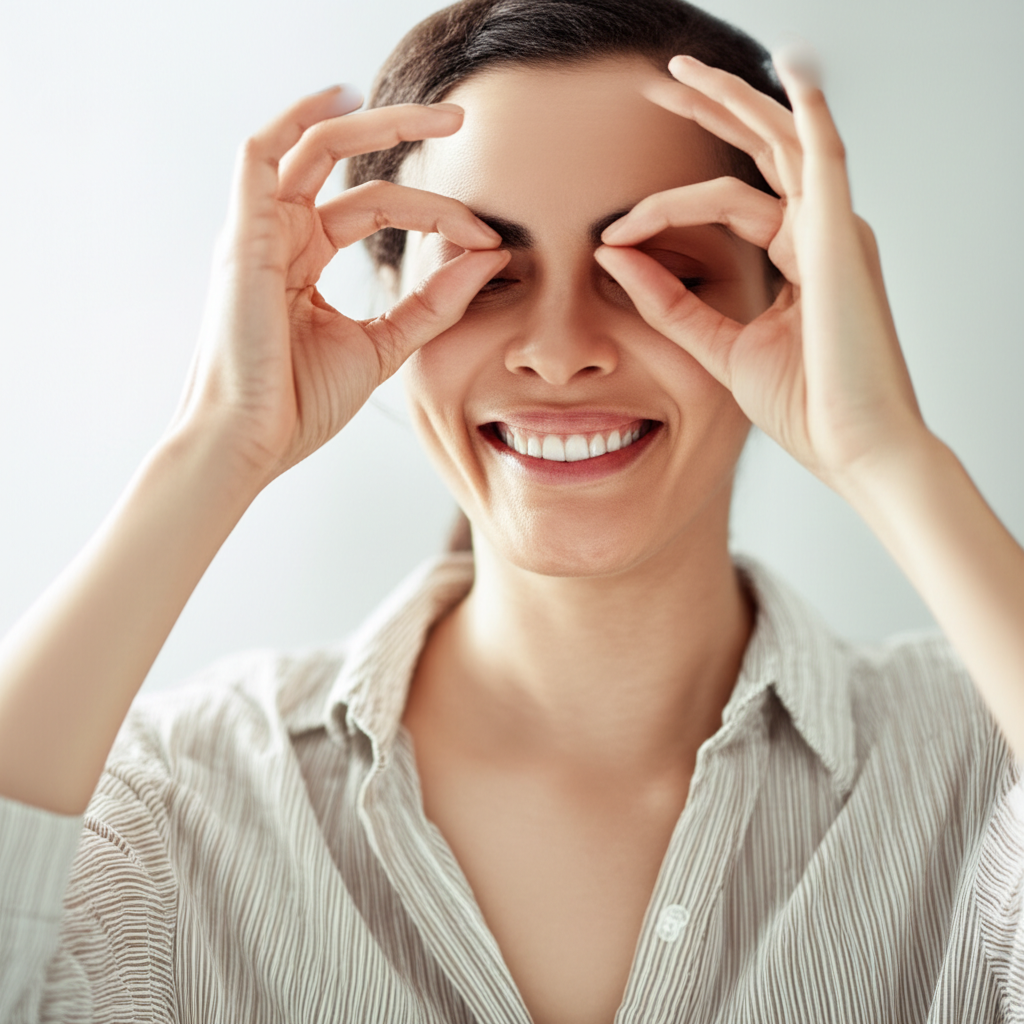
- What it is: Palming is a deeply relaxing technique where you cover your closed eyes with the palms of your hands, blocking out all light.
- How to do it:
- Rub your palms together vigorously for 10-15 seconds until they feel warm.
- Gently cup your warm palms over your closed eyes, ensuring no light seeps in. Rest your fingers lightly on your forehead, avoiding pressure on your eyeballs.
- Breathe deeply and evenly. Focus on the warmth and the darkness.
- Remain in this position for 1-5 minutes, or even longer if it feels good.
- Slowly remove your hands and gently open your eyes.
- Why it helps: The warmth from your hands can be incredibly soothing for tired eyes. The darkness provides a break from visual stimuli, allowing the optic nerves and eye muscles to relax completely. It’s a wonderful way to reduce strain and promote a sense of calm.
2. Blinking Exercises: Nature’s Eye Drops
- What it is: Conscious blinking helps to lubricate the eyes naturally and can be particularly beneficial for those experiencing dryness due to prolonged screen time.
- How to do it:
- Sit comfortably, looking straight ahead.
- Blink rapidly 10-20 times, as if your eyes are fluttering, without straining.
- Close your eyes gently for 20 seconds, focusing on relaxing your facial muscles.
- Repeat this cycle 3-5 times.
- Alternatively, simply become more aware of your natural blinking rate throughout the day and consciously increase it, especially when using screens.
- Why it helps: Blinking helps to spread the tear film evenly across the eye’s surface, keeping them moist and preventing dryness. It also provides tiny, frequent breaks from continuous focus, which can reduce fatigue.
3. Eye Rotations and Scanning: Gentle Movement
- What it is: These exercises involve moving your eyes in various directions to encourage flexibility and circulation.
- How to do it:
- Sit comfortably with your head still, looking straight ahead.
- Up and Down: Inhale, look up towards the ceiling (without moving your head). Exhale, look down towards the floor. Repeat 5-10 times.
- Side to Side: Inhale, look to your far right. Exhale, look to your far left. Repeat 5-10 times.
- Diagonal: Look up to the top right, then down to the bottom left. Repeat 5-10 times. Then switch: up to the top left, down to the bottom right. Repeat 5-10 times.
- Circular: Gently roll your eyes in a clockwise circle 5-10 times, then counter-clockwise 5-10 times. Do this slowly and smoothly.
- Why it helps: These movements can help promote circulation around the eyes and encourage gentle flexibility of the extraocular muscles. It’s not about intense stretching, but about encouraging gentle, fluid movement which can relieve stiffness from prolonged static gazing.
4. Focus Shifting (Near-Far Gazing): The Accommodation Challenge
- What it is: This exercise helps the eyes practice their ability to adjust focus between near and distant objects.
- How to do it:
- Hold your thumb about 6-10 inches from your face. Focus intently on your thumb for 10-15 seconds.
- Shift your gaze to a distant object (at least 20 feet away) and focus intently on it for 10-15 seconds.
- Shift your gaze back to your thumb.
- Repeat this sequence 5-10 times.
- Why it helps: This practice can help to gently exercise the ciliary muscles within the eye, which are responsible for changing the lens’s shape to focus at different distances. Regularly engaging these muscles can support their natural function and may help reduce the stiffness that can come from prolonged focus at a single distance.
5. Gentle Gazing (Trataka Variation): Cultivating Concentration
- What it is: Traditionally, Trataka involves fixed gazing at a candle flame. For a beginner-friendly, safer variation, we’ll focus on a soft, relaxed gaze at a non-straining point.
- How to do it:
- Sit comfortably in a quiet space.
- Choose a simple, non-distracting focal point at eye level, about 3-6 feet away (e.g., a dot on the wall, your thumb held steady).
- Gaze softly at this point, allowing your eyes to relax. Try not to strain or intensely stare. Let your gaze be soft and wide.
- Maintain this soft gaze for 1-2 minutes, blinking naturally.
- Close your eyes gently for a minute or two afterwards, allowing them to rest in the darkness.
- Why it helps: This practice is known to help improve concentration and visual acuity over time. The soft, steady gaze can be very calming for the mind and the eyes, promoting relaxation and reducing mental chatter. It’s a mindful practice that encourages a break from the busy, multi-focused demands of modern vision.
6. Yoga Poses for Overall Well-being: Indirect Eye Support
- What it is: Certain yoga postures, while not directly targeting the eyes, can promote overall relaxation, improve circulation to the head and neck, and reduce stress, all of which indirectly benefit eye health.
- How to do it (Examples):
- Child’s Pose (Balasana): Gently folds forward, resting the forehead on the ground, which can be very calming and relaxing for the entire system, including the eyes.
- Legs-Up-the-Wall (Viparita Karani): Reverses blood flow, which can gently increase circulation to the upper body and head, potentially nourishing the eyes. It’s also deeply relaxing.
- Downward-Facing Dog (Adho Mukha Svanasana) (Modified): If comfortable, this inversion can also increase blood flow to the head. Always ensure your head is supported or below your heart level, and if you have high blood pressure or glaucoma, consult a doctor before practicing inversions.
- Why it helps: Reducing overall body tension and stress, improving blood flow, and fostering a state of relaxation through these poses can create a more optimal environment for your eyes to thrive. When the body is relaxed, the eyes are often relaxed too. The World Health Organization (WHO) consistently highlights the benefits of physical activity and relaxation for overall health, which includes indirect benefits for eye health.
7. Mindful Breaks and Screen Habits: Holistic Care
- What it is: Integrating mindful breaks and healthy screen habits alongside eye yoga practices for a comprehensive approach.
- How to do it:
- The 20-20-20 Rule: Every 20 minutes, look at something 20 feet away for at least 20 seconds. This is a crucial break for your eyes.
- Optimal Screen Setup: Ensure your screen is at arm’s length, slightly below eye level. Adjust brightness and contrast.
- Adequate Lighting: Avoid working in dimly lit rooms or with glare on your screen.
- Hydration: Drink plenty of water throughout the day, as dehydration can contribute to dry eyes.
- Quality Sleep: Prioritize 7-9 hours of quality sleep each night to allow your eyes to fully rest and repair.
- Why it helps: These habits create a supportive environment for your eyes. Combining them with the specific yoga practices ensures a holistic approach, addressing both direct eye comfort and the external factors that impact eye health. For further reading on healthy screen habits, WebMD offers excellent advice.
Integrating Eye Yoga into Your Daily Routine
The beauty of these simple tips for yoga in eye health is their accessibility. You don’t need special equipment or a lot of time. Even dedicating 5-10 minutes a day can make a difference.
- Start Small: Begin with just one or two practices that resonate with you.
- Consistency is Key: A few minutes every day is often more beneficial than a long session once a week.
- Listen to Your Body: Never push through discomfort. These are gentle practices.
- Integrate with Breaks: Use your screen breaks as an opportunity to do some palming or blinking exercises.
- Before Bed: Palming or gentle gazing before sleep can be wonderfully relaxing for both your eyes and your mind.
Making these practices a regular part of your day can contribute significantly to supporting your eye comfort and well-being.
Important Considerations and Safety First
While these simple tips for yoga in eye health are generally safe and beneficial for promoting comfort and relaxation, it’s crucial to approach them with mindfulness and caution.
- Not a Substitute for Medical Care: Eye yoga exercises are not a cure for eye diseases or a replacement for professional medical advice. If you have an existing eye condition (like glaucoma, cataracts, macular degeneration, or any vision changes), always consult your eye care professional before trying any new practices.
- Gentle Approach: Always practice gently, without any strain or pain. Your eyes are delicate. If any exercise causes discomfort, stop immediately.
- Cleanliness: Ensure your hands are clean before touching your eyes for practices like palming.
- Individual Variation: What feels good for one person might not feel good for another. Adjust the duration and intensity of these exercises based on your own comfort level.
These practices are intended to be supportive and complementary to good eye hygiene and regular professional eye check-ups. They are about promoting a sense of ease and well-being for your eyes, not about "fixing" medical conditions.
Conclusion: Embracing Brighter, More Relaxed Eyes
Our eyes are precious, serving as our primary connection to the visual world. In an era of constant digital engagement, providing them with moments of rest, gentle movement, and focused care is not just a luxury, but a necessity. The simple tips for yoga in eye health discussed here offer accessible, non-straining ways to support your ocular comfort and vitality.
By incorporating practices like palming, conscious blinking, gentle eye rotations, and mindful gazing into your daily routine, you’re offering your eyes a well-deserved break and promoting their natural ability to relax and focus. Remember, these are not medical treatments but rather supportive practices designed to alleviate common strain and foster overall eye well-being.
Embrace these gentle techniques with an open mind and a compassionate approach to yourself. You may find that even a few minutes each day dedicated to these simple tips for yoga in eye health can lead to a noticeable difference, helping you achieve brighter, more relaxed, and more comfortable vision as you navigate the beautiful, busy world around you. Your eyes will thank you for this mindful attention and care.