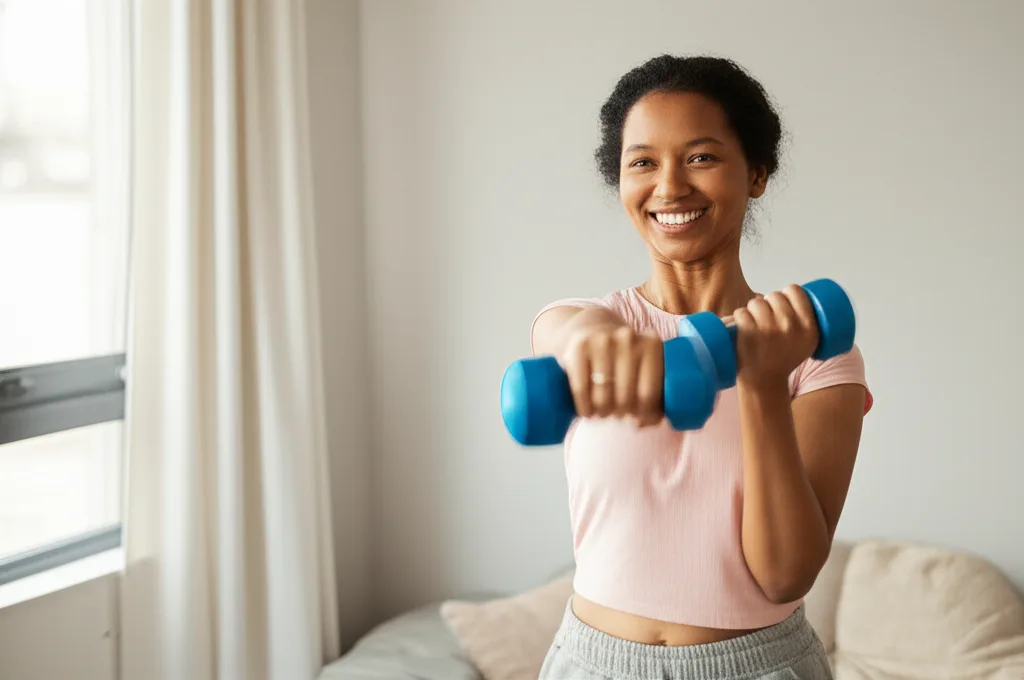
Discovering easy ways to practice muscle strength at home can be a game-changer for your overall well-being and fitness journey. In our busy lives, finding time for the gym isn’t always feasible, but that doesn’t mean your fitness goals have to take a backseat. The good news is that building and maintaining muscle strength is incredibly accessible, often requiring nothing more than your own body weight and a bit of dedication.
This comprehensive guide is designed to empower you with simple, effective, and safe strategies to incorporate strength training into your daily routine, all from the comfort of your home. We’ll explore why muscle strength is so important, how to get started safely, and provide you with fantastic, easy ways to practice muscle strength at home that are perfect for beginners and seasoned enthusiasts alike.
Why Muscle Strength Matters (Even at Home)
You might wonder why focusing on muscle strength is so crucial. Beyond aesthetics, strong muscles play a vital role in numerous aspects of your health and daily life. Regular strength training, even through easy ways to practice muscle strength at home, can offer a wealth of benefits:
- Boosts Metabolism: Muscle tissue burns more calories at rest than fat tissue. Building muscle can help support a healthy metabolism, making it easier to manage your weight.
- Enhances Bone Density: As we age, our bones can become weaker. Strength training puts healthy stress on your bones, which is known to help stimulate bone growth and density, potentially reducing the risk of osteoporosis.
- Improves Balance and Stability: Stronger muscles, especially in your core and lower body, can help improve your balance and coordination, reducing the risk of falls, particularly as you get older.
- Supports Daily Activities: From carrying groceries to playing with children, everyday tasks become easier when your muscles are strong and capable.
- Better Mood and Energy: Exercise, including strength training, releases endorphins, which can help elevate your mood and reduce stress. Many people find that a regular workout routine can help improve sleep quality and energy levels.
- Joint Health: Strong muscles surrounding your joints can help provide better support and stability, which can help protect them from injury.
The beauty of practicing muscle strength at home is that it removes common barriers like gym memberships, travel time, and feeling self-conscious. It truly makes fitness an achievable goal for everyone. For more on the benefits of strength training, you can visit resources like Mayo Clinic’s guide on strength training benefits.
Before You Begin: Safety First!
Before diving into the easy ways to practice muscle strength at home, it’s essential to prioritize safety. While home workouts are generally safe, proper preparation and awareness can help prevent injuries and ensure a positive experience.
- Consult a Professional: If you have any underlying health conditions, injuries, or concerns, it’s always a good idea to speak with your doctor or a qualified healthcare professional before starting any new exercise program. This isn’t medical advice, but a general recommendation for your well-being.
- Warm-Up: Never skip your warm-up! A 5-10 minute warm-up of light cardio (like marching in place, arm circles, leg swings) helps prepare your muscles and joints for activity, increasing blood flow and flexibility.
- Focus on Form, Not Speed or Quantity: Correct form is paramount. Doing an exercise incorrectly can negate its benefits and increase your risk of injury. Start with fewer repetitions and master the movement before trying to do more. Watch videos, use a mirror, or even record yourself to check your technique.
- Listen to Your Body: Pay attention to how your body feels. Some muscle soreness after a workout (delayed onset muscle soreness or DOMS) is normal, but sharp pain is a warning sign. If something hurts, stop immediately.
- Hydrate: Drink water before, during, and after your workout to stay properly hydrated.
- Clear Your Space: Ensure you have enough room to move freely without bumping into furniture or objects. A clear, safe environment is crucial for effective home workouts.
- Cool-Down: After your strength exercises, spend 5-10 minutes cooling down with gentle stretches. This can help improve flexibility and reduce muscle stiffness.
WebMD offers excellent advice on safe exercise practices, which can further guide your at-home routine.
7 Fantastic Easy Ways to Practice Muscle Strength at Home
Now for the exciting part! Here are seven accessible and effective exercises you can do right in your living room, designed to help you build muscle strength without any fancy equipment. These are truly easy ways to practice muscle strength at home.
1. Bodyweight Squats: The Foundation of Lower Body Strength
Squats are a powerhouse exercise that targets your glutes, quadriceps, hamstrings, and even your core. They mimic a natural movement we do daily (sitting down and standing up), making them incredibly functional.
- How to do it: Stand with your feet shoulder-width apart, toes pointing slightly outward. Keep your chest up, shoulders back, and core engaged. Imagine you’re sitting back into a chair. Lower your hips down and back, ensuring your knees track in line with your toes (don’t let them collapse inward). Go as deep as comfortable, ideally until your thighs are parallel to the floor, then push through your heels to return to the starting position.
- Muscles worked: Glutes, quads, hamstrings, core.
- Beginner modification: If a full squat is too challenging, try "chair squats" where you sit down onto a chair and stand back up, using the chair for support and depth guidance.
- Tips: Keep your weight in your heels. Breathe in as you lower, breathe out as you stand up.
2. Push-Ups: Upper Body and Core Power
Push-ups are a classic for a reason – they work your chest, shoulders, triceps, and core all at once! They might seem intimidating, but there are many modifications to make them accessible.
- How to do it (Traditional): Start in a plank position with your hands slightly wider than your shoulders, fingers pointing forward. Keep your body in a straight line from head to heels, core engaged. Lower your chest towards the floor by bending your elbows, keeping them tucked slightly towards your body. Push back up to the starting plank position.
- Muscles worked: Chest, shoulders, triceps, core.
- Beginner modification:
- Wall Push-Ups: Stand facing a wall, about an arm’s length away. Place your hands on the wall at shoulder height and width. Lean in towards the wall, bending your elbows, then push back. The further your feet are from the wall, the harder it gets.
- Knee Push-Ups: Perform a push-up from your knees instead of your toes, keeping your body in a straight line from your head to your knees.
- Tips: Keep your core tight to prevent your hips from sagging. Breathe in as you lower, breathe out as you push up.
3. Lunges: Unilateral Leg Strength and Balance
Lunges are fantastic for building strength in each leg independently, which also helps improve balance and stability.
- How to do it: Stand tall with your feet hip-width apart. Take a large step forward with one leg. Lower your hips until both knees are bent at approximately a 90-degree angle. Ensure your front knee is directly above your ankle (not extending past your toes) and your back knee hovers just above the floor. Push off your front foot to return to the starting position. Alternate legs.
- Muscles worked: Quads, hamstrings, glutes, calves, core.
- Beginner modification: Hold onto a wall or sturdy chair for balance. You can also perform "reverse lunges" by stepping backward, which can sometimes feel more stable.
- Tips: Keep your core engaged and chest up. Avoid letting your front knee wobble inward.
4. Planks: The Ultimate Core Stabilizer
A strong core is the foundation of all movement and can help prevent back pain. Planks are one of the most effective exercises for building core strength without needing any movement.
- How to do it: Start in a push-up position, but instead of resting on your hands, rest on your forearms. Your elbows should be directly under your shoulders. Keep your body in a straight line from your head to your heels, engaging your core, glutes, and quads. Avoid letting your hips sag or rise too high.
- Muscles worked: Core (abdominals, obliques, lower back), shoulders, glutes.
- Beginner modification: Perform the plank from your knees instead of your toes, keeping the straight line from head to knees. You can also do a plank against a wall by placing your forearms on the wall and leaning into it.
- Tips: Focus on breathing deeply and maintaining a straight line. Time how long you can hold it and try to gradually increase your hold time.
5. Glute Bridges: Targeting Your Posterior Chain
Often overlooked, strong glutes are crucial for posture, lower back health, and overall power. Glute bridges are an easy way to activate these muscles.
- How to do it: Lie on your back with your knees bent, feet flat on the floor hip-width apart, and heels a few inches from your glutes. Arms can be by your sides. Engage your core and glutes, then lift your hips off the floor until your body forms a straight line from your shoulders to your knees. Squeeze your glutes at the top. Slowly lower back down.
- Muscles worked: Glutes, hamstrings, lower back.
- Beginner modification: If you feel discomfort, try placing a pillow under your head for neck support. Focus on the squeeze at the top.
- Tips: Avoid arching your lower back too much. The movement should come from your hips and glutes.
6. Water Bottle Bicep Curls / Triceps Extensions: Using Household Items
You don’t need dumbbells to add light resistance. Water bottles, cans of food, or small bags of rice can work perfectly! This is another one of the truly easy ways to practice muscle strength at home.
- How to do Bicep Curls: Stand or sit holding a filled water bottle (or similar item) in each hand, palms facing forward. Keep your elbows tucked into your sides. Curl the weights up towards your shoulders, squeezing your biceps at the top. Slowly lower back down with control.
- How to do Triceps Extensions: Hold one water bottle with both hands, extending it overhead. Keep your elbows close to your head. Slowly lower the bottle behind your head by bending your elbows, then extend your arms back up, squeezing your triceps.
- Muscles worked: Biceps (front of upper arm), Triceps (back of upper arm).
- Beginner modification: Use lighter items or just your body weight, focusing on the contraction.
- Tips: Maintain control throughout the movement, don’t let gravity do all the work on the way down.
7. Chair Dips / Assisted Squats: Leveraging Your Furniture
Your sturdy chairs and couches aren’t just for sitting; they can be excellent tools for strength training.
- How to do Chair Dips: Sit on the edge of a sturdy chair with your hands gripping the front edge, fingers pointing forward. Slide your bottom off the chair, extending your legs out in front of you (bent knees make it easier, straight legs harder). Lower your body by bending your elbows until they are at about a 90-degree angle, keeping your back close to the chair. Push back up to the starting position using your triceps.
- How to do Assisted Squats: Use a chair for depth as mentioned in the squat section, or stand facing a sturdy chair, holding onto the back for balance as you perform squats.
- Muscles worked: Triceps, shoulders (for dips); Quads, glutes, hamstrings (for squats).
- Beginner modification: For dips, keep your knees bent at a 90-degree angle to reduce the load. For squats, simply use the chair for light balance.
- Tips: Ensure your chair is stable and won’t slide. Keep your chest up during dips.
Structuring Your At-Home Strength Routine
Once you’re familiar with these easy ways to practice muscle strength at home, you’ll want to organize them into a routine.
- Frequency: Aim for 2-3 strength training sessions per week, with at least one day of rest in between to allow your muscles to recover and grow.
- Sets and Reps: For beginners, start with 2-3 sets of 8-12 repetitions for each exercise. For planks, aim for 3 sets of 20-60 second holds.
- Rest: Rest for 60-90 seconds between sets.
- Progressive Overload: To continue building strength, you need to gradually increase the challenge over time. This could mean:
- Doing more repetitions or sets.
- Holding planks for longer.
- Slowing down the movement (e.g., a 3-second lowering phase).
- Reducing rest time between sets.
- Moving to a harder variation of an exercise (e.g., knee push-ups to full push-ups).
Beyond the Basics: More Easy Ways to Practice Muscle Strength at Home
As you get stronger and more confident, you might want to explore other simple additions to your home workout. These further exemplify easy ways to practice muscle strength at home.
- Resistance Bands: These versatile, inexpensive tools can add resistance to many bodyweight exercises (like squats, glute bridges, or rows) and open up new exercise possibilities. They’re lightweight and portable, perfect for home use.
- Yoga and Pilates: While often associated with flexibility, both yoga and Pilates are fantastic for building core strength, body awareness, and muscular endurance. Many beginner-friendly routines are available online for free.
- Active Chores: Don’t underestimate the strength-building potential of everyday tasks! Carrying groceries, gardening, shoveling snow, or even vigorous cleaning can engage various muscle groups and contribute to your overall fitness.
- Stairs: If you have stairs at home, simply walking up and down them a few times can be a great way to engage your leg muscles and get your heart rate up.
The World Health Organization (WHO) provides global recommendations on physical activity for health, including strength training, emphasizing its importance for all age groups.
Staying Motivated and Consistent
The key to long-term success with any fitness routine is consistency. Here are some tips to help you stay motivated with your easy ways to practice muscle strength at home:
- Set Realistic Goals: Start small and celebrate every achievement. Don’t expect to transform overnight.
- Schedule Your Workouts: Treat your workout time like an important appointment. Block it out in your calendar.
- Track Your Progress: Keep a simple journal or use an app to note down your sets, reps, and any improvements. Seeing how far you’ve come can be a huge motivator.
- Find a Buddy: If possible, find a friend or family member to work out with virtually or in person. Accountability can make a big difference.
- Make it Enjoyable: Put on your favorite music, listen to a podcast, or try different exercises to keep things fresh.
- Be Patient and Kind to Yourself: There will be days when you don’t feel like working out, and that’s okay. Don’t beat yourself up; just get back to it the next day. Every step forward counts.
Conclusion
Incorporating easy ways to practice muscle strength at home into your life is a powerful step towards a healthier, stronger you. You don’t need a gym, expensive equipment, or hours of free time to make significant progress. With just your body weight, a bit of space, and consistent effort, you can build impressive strength, boost your energy, improve your mood, and enhance your overall quality of life.
Remember to prioritize safety, listen to your body, and celebrate your journey. Start with these fantastic exercises, gradually challenge yourself, and enjoy the incredible benefits that come with building muscle strength right in your own home. Your body will thank you for it! So, what are you waiting for? Start exploring these simple, effective ways to practice muscle strength at home today!