Life in the modern world often feels like a constant race against the clock, leaving many of us feeling overwhelmed, stressed, and disconnected from our inner calm. But what if finding peace didn’t require a costly retreat or a complicated schedule? What if the solution was right within your reach, in the comfort of your own home? This article will explore a variety of easy ways to practice relaxation at home, helping you cultivate a sense of tranquility and well-being without stepping foot outside your door. You don’t need special equipment or extensive training to start feeling more relaxed and grounded; just a willingness to try some simple, yet powerful, techniques.
Why Relaxation Matters (and Why Home is Your Perfect Sanctuary)
Before diving into the "how," let’s briefly touch upon the "why." Taking time to relax isn’t a luxury; it’s a vital component of a healthy, balanced life. Regular relaxation is known to help manage feelings of stress, can support a more positive mood, and may even improve focus and energy levels. When you’re relaxed, your body and mind can recover from daily demands, leading to a greater sense of overall well-being.
And where better to embark on this journey than your own home? Your personal space offers a unique blend of comfort, privacy, and convenience that makes it the ideal environment for unwinding. There’s no travel time, no need to adapt to new surroundings, and you can create an atmosphere that perfectly suits your needs. Your home is a sanctuary, a place where you can truly let go and be yourself.
Simple Strategies: Easy Ways to Practice Relaxation at Home
Ready to transform your home into a haven of calm? Here are seven simple, yet effective, strategies to help you relax and recharge.
1. Deep Breathing Exercises: Your Built-In Calm Switch
One of the most immediate and accessible tools for relaxation is your breath. Deep breathing, specifically diaphragmatic or belly breathing, is a powerful technique that can help activate your body’s natural relaxation response. It’s incredibly simple to learn and can be done anywhere, anytime.
How to Practice:
- Find a comfortable position, sitting or lying down.
- Place one hand on your chest and the other on your belly, just below your rib cage.
- Inhale slowly and deeply through your nose, feeling your belly rise as your diaphragm expands. Your chest hand should remain relatively still.
- Exhale slowly through your mouth, letting your belly fall. You might purse your lips slightly as if blowing through a straw.
- Focus on the sensation of your breath moving in and out, and the gentle rise and fall of your abdomen.
- Start with 5-10 minutes a day, gradually increasing as you feel comfortable.
Benefits: Deep breathing can help slow your heart rate, lower blood pressure, and is known to reduce muscle tension. It’s an excellent first step for anyone looking for easy ways to practice relaxation at home. For more detailed guidance on deep breathing, the Mayo Clinic offers excellent resources: Deep breathing: How to ease stress and anxiety.
2. Mindful Moments: Engaging Your Senses
Mindfulness is the practice of being fully present in the moment, observing your thoughts, feelings, and sensations without judgment. It doesn’t require hours of meditation; you can infuse mindfulness into everyday activities right in your home.
How to Practice:
- Mindful Eating: Choose a small snack, like a piece of fruit or a square of chocolate. Before you eat it, notice its color, texture, and scent. Take a small bite, chew slowly, and pay attention to the flavors, the sensation in your mouth, and how your body reacts.
- Mindful Listening: Put on a piece of music you love, or simply listen to the ambient sounds of your home. Close your eyes and truly focus on every sound – the different instruments, the rhythm, the lyrics, or the subtle hum of your refrigerator, the chirping of birds outside.
- Mindful Walking (Even Indoors): If you have a hallway or a small clear space, walk slowly. Pay attention to the sensation of your feet touching the floor, the movement of your legs, and the feeling of your body shifting.
Benefits: Practicing mindfulness can help anchor you in the present, reducing rumination about the past or worry about the future. It can help improve focus and appreciation for the simple things in life.
3. Gentle Movement: Stretching and Yoga Poses
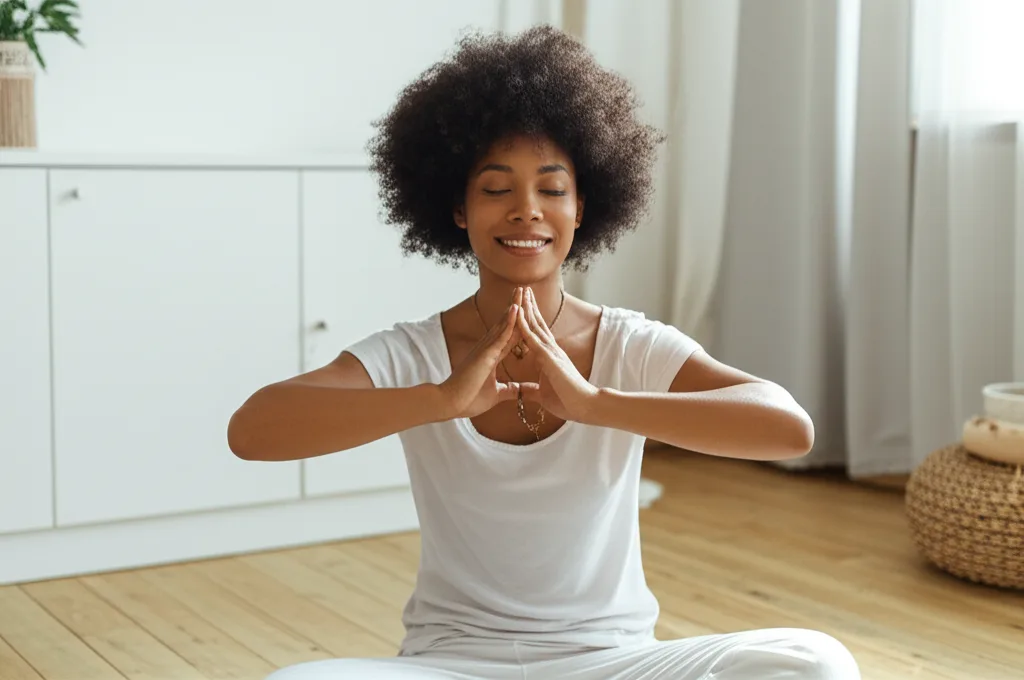
Our bodies often hold tension, especially in the neck, shoulders, and back. Gentle movement, stretching, and simple yoga poses are fantastic easy ways to practice relaxation at home by releasing this physical tightness. You don’t need to be flexible or have any prior experience.
How to Practice:
- Neck Rolls: Gently drop your chin to your chest, then slowly roll your right ear towards your right shoulder, hold, and return to center. Repeat on the left side.
- Shoulder Shrugs: Inhale and shrug your shoulders up towards your ears, hold the tension, then exhale and let them drop. Repeat a few times.
- Cat-Cow Stretch: On your hands and knees, inhale as you arch your back and lift your head (Cow pose), then exhale as you round your spine and tuck your chin (Cat pose).
- Child’s Pose (Yoga): Kneel on the floor, sit your hips back towards your heels, and fold your torso forward, resting your forehead on the mat or floor. Extend your arms forward or rest them alongside your body. This pose is incredibly calming and restorative.
- Corpse Pose (Savasana): Lie flat on your back, arms slightly away from your body with palms up, legs extended. Close your eyes and allow your body to completely relax into the floor. This is a powerful pose for integration and deep relaxation.
Benefits: Gentle movement can help release muscle tension, improve circulation, and stimulate endorphins, which are natural mood boosters. Always listen to your body and never push into pain. WebMD offers great information on how stretching can contribute to relaxation: Stretching for Stress Relief.
4. Create a Cozy Sanctuary: Your Relaxation Nook
Your physical environment plays a significant role in your ability to relax. By intentionally creating a designated "relaxation nook" or simply enhancing an existing space, you can signal to your mind that it’s time to unwind.
How to Practice:
- Lighting: Dim harsh overhead lights and opt for softer lighting from lamps, fairy lights, or even candles (with caution!).
- Scents: Engage your sense of smell with calming aromas. Diffuse essential oils like lavender or chamomile, light a scented candle, or simply open a window to let in fresh air.
- Comfort: Ensure you have comfortable seating – a plush armchair, a pile of soft pillows on the floor, or a cozy blanket.
- Declutter: Even a small amount of clutter can be distracting. Clear away any unnecessary items from your chosen relaxation spot.
- Sound: Play soothing instrumental music, nature sounds (rain, ocean waves), or simply enjoy the quiet.
Benefits: A dedicated, calming space can act as a cue for your brain to switch into relaxation mode. It provides a consistent environment where you can practice easy ways to practice relaxation at home without external distractions.
5. Engage in Hobbies & Creative Outlets
Sometimes, the best way to relax is to lose yourself in an activity you genuinely enjoy. Engaging in hobbies or creative pursuits can help shift your focus away from stressors, allowing your mind to enter a state of "flow" where time seems to melt away.
How to Practice:
- Read: Dive into a good book, magazine, or even an online article that interests you.
- Listen to Music: Create a playlist of your favorite calming tunes and simply enjoy.
- Creative Expression: Try drawing, painting, coloring (adult coloring books are popular for a reason!), knitting, crocheting, or even simply doodling. The process, not the outcome, is what matters here.
- Gardening (Indoor or Outdoor): Tending to plants, whether in pots indoors or a small garden patch, can be incredibly therapeutic.
- Puzzles or Games: Engage your mind with a jigsaw puzzle, a crossword, or a gentle strategy game.
Benefits: These activities can provide a healthy distraction, foster a sense of accomplishment, and allow for self-expression, all of which contribute to a more relaxed state of mind. They are wonderful easy ways to practice relaxation at home because they often use existing materials and require no special setup.
6. Progressive Muscle Relaxation (PMR)
Progressive Muscle Relaxation (PMR) is a technique where you systematically tense and then relax different muscle groups in your body. This practice helps you become more aware of physical tension and learn how to release it.
How to Practice:
- Find a quiet place where you won’t be disturbed. Sit or lie down comfortably.
- Start with your feet. Tense the muscles in your feet as tightly as you can for 5-10 seconds. Really squeeze them!
- Now, completely release the tension. Notice the difference between the tense and relaxed state. Pay attention to the feeling of warmth and looseness.
- Move up your body, systematically tensing and relaxing each muscle group:
- Calves
- Thighs
- Glutes
- Abdomen
- Hands and forearms
- Upper arms
- Shoulders
- Neck
- Face (forehead, eyes, jaw)
- After relaxing each group, take a few deep breaths.
Benefits: PMR is known to help reduce physical tension, which often accompanies mental stress. By consciously releasing tension, you can encourage your entire body to relax.
7. The Power of Nature (Even Indoors)
You don’t need a sprawling garden or a hiking trail to connect with nature and reap its calming benefits. Bringing elements of the natural world into your home can significantly contribute to a peaceful atmosphere.
How to Practice:
- Indoor Plants: Fill your space with houseplants. Not only do they add beauty, but caring for them can be a meditative act, and they may even improve air quality.
- Natural Light: Open curtains and blinds to let in as much natural light as possible. Position your relaxation spot near a window.
- Nature Sounds: Play recordings of rain, ocean waves, birdsong, or a babbling brook.
- Visuals: Display artwork or photographs of serene natural landscapes.
- Open a Window: Even if you live in a city, opening a window can bring in fresh air and the sounds of the outside world, helping you feel more connected.
Benefits: Research suggests that exposure to nature, even in small doses, can help reduce feelings of stress and promote a sense of well-being. The World Health Organization (WHO) emphasizes the importance of healthy environments for mental well-being, highlighting the connection between nature and health: Mental health.
Making Relaxation a Habit: Tips for Consistency
Learning easy ways to practice relaxation at home is one thing; making it a consistent part of your routine is another. Here are some tips to help you stick with it:
- Start Small: Don’t try to implement all seven techniques at once. Choose one or two that resonate most with you and practice them for just 5-10 minutes a day. Even short bursts of relaxation can make a difference.
- Schedule It: Just like you’d schedule a meeting or an appointment, set aside specific times for your relaxation practice. It could be first thing in the morning, during your lunch break, or before bed.
- Be Patient and Kind to Yourself: There will be days when your mind wanders, or you feel too busy. That’s perfectly normal. Don’t judge yourself; simply acknowledge it and gently redirect your focus or try again tomorrow.
- Experiment: Not every technique will work for everyone, and that’s okay. Try different methods until you find what truly helps you unwind and feel good.
- Listen to Your Body: Pay attention to how different relaxation techniques make you feel. Your body is a great indicator of what it needs.
Embrace Your Home as Your Haven of Calm
You have everything you need to cultivate a calmer, more peaceful existence right where you are. By integrating these easy ways to practice relaxation at home into your daily life, you’re not just finding temporary relief; you’re building resilience, enhancing your well-being, and creating a sanctuary within your own walls.
Start today. Pick one technique from this list, set aside a few minutes, and give yourself the gift of peace. Your home is waiting to become your ultimate calm retreat.