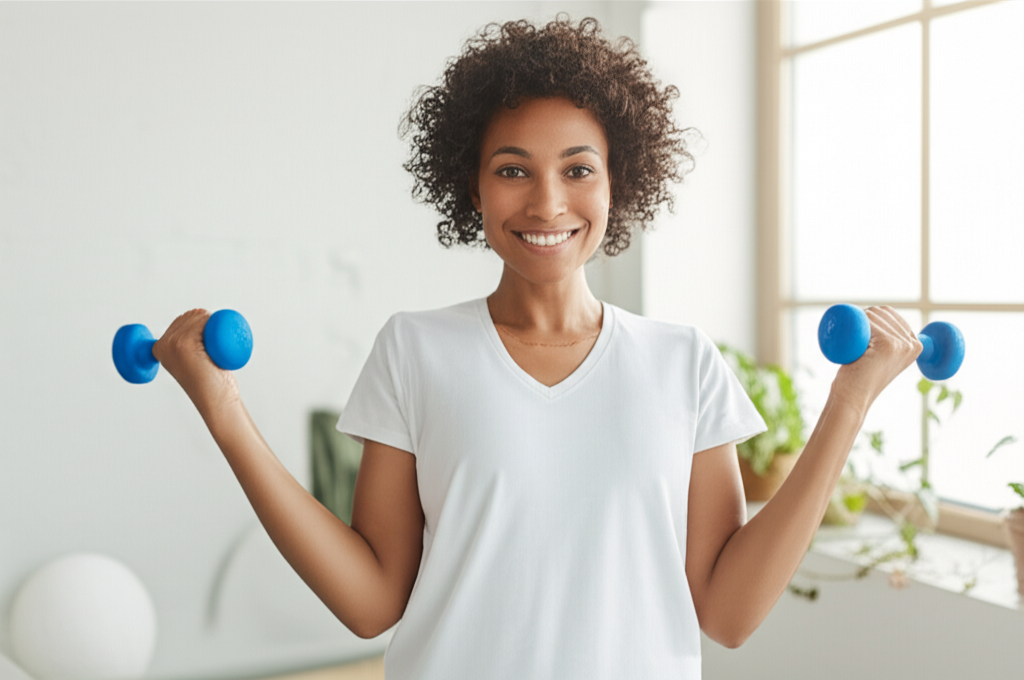
Welcome to a journey of discovering simple, effective, and truly empowering easy ways to practice muscle strength at home! It’s incredible what you can achieve without a gym membership, fancy equipment, or even leaving the comfort of your living room. Building muscle strength is not just for athletes or bodybuilders; it’s a fundamental part of a healthy, vibrant life, supporting everything from daily tasks to your overall well-being. And the best part? It can be surprisingly fun and accessible for everyone.
This article is designed as your friendly, beginner-friendly guide to embracing home-based strength training. We’ll explore why muscle strength is so important, how to get started safely, and provide you with a fantastic array of exercises that require little to no equipment. Get ready to feel stronger, more energetic, and confident in your own skin!
Why Muscle Strength Matters (Beyond the Gym)
Before we dive into the "how," let’s chat about the "why." You might be wondering, "What’s in it for me?" The benefits of developing and maintaining muscle strength extend far beyond aesthetics. It’s a cornerstone of physical health and can significantly enhance your quality of life.
Regular muscle-strengthening activities are known to offer a wide array of advantages. They can help improve your ability to perform everyday activities with ease, such as carrying groceries, lifting children, or even just getting up from a chair. Stronger muscles also provide better support for your joints, which may help reduce the risk of injuries and improve balance, especially as we age.
Beyond the practical, strength training may support bone density, which is crucial for preventing conditions like osteoporosis. It can also play a role in managing your weight by boosting your metabolism, as muscle tissue burns more calories at rest than fat tissue. And let’s not forget the mental health benefits! Physical activity, including strength training, is known to help reduce stress, improve mood, and even enhance sleep quality.
Trusted health organizations consistently highlight the importance of incorporating strength training into your routine. You can learn more about the incredible advantages of strength training from authoritative sources like the Mayo Clinic or WebMD. These resources further emphasize how a consistent strength routine can contribute to a healthier, more active lifestyle.
Getting Started Safely: Your Home Workout Foundation
Embarking on any new fitness routine should always begin with safety in mind. While we’re focusing on easy ways to practice muscle strength at home, it’s still crucial to approach your workouts thoughtfully and listen to your body.
- Warm-Up is Your Friend: Before you jump into any exercises, dedicate 5-10 minutes to a light warm-up. This could include marching in place, arm circles, leg swings, or gentle dynamic stretches. A warm-up prepares your muscles for activity, increases blood flow, and can help prevent strains.
- Form Over Everything: This is perhaps the most important rule. Proper form ensures you’re working the intended muscles effectively and, more importantly, reduces your risk of injury. It’s better to do fewer repetitions with perfect form than many with sloppy technique. If you’re unsure about an exercise, watch a reputable tutorial video or start with a modified version.
- Listen to Your Body: You know your body best. If an exercise causes sharp pain, stop immediately. A little muscle fatigue or a "good burn" is normal, but pain is a warning sign. Take rest days when needed and don’t push through discomfort.
- Cool-Down and Stretch: After your workout, spend 5-10 minutes cooling down with static stretches (holding a stretch for 20-30 seconds). This can help improve flexibility and may reduce post-workout muscle soreness.
- Consistency is Key: You won’t see results overnight, and that’s perfectly okay! The real magic happens with consistency. Aim for 2-3 strength training sessions per week, allowing a day of rest in between for your muscles to recover and rebuild.
Easy Ways to Practice Muscle Strength at Home: Simple & Effective Exercises
Now for the exciting part – the exercises! These fundamental movements require minimal to no equipment and are fantastic easy ways to practice muscle strength at home. Remember to focus on controlled movements and good form.
1. Bodyweight Basics: Your Foundation for Strength
Bodyweight exercises are incredibly effective because they use your own body’s resistance. They are truly among the most accessible easy ways to practice muscle strength at home.
-
Squats (or Chair Squats):
- How to do it: Stand with your feet shoulder-width apart, toes pointing slightly out. Imagine you’re sitting down into a chair, pushing your hips back and bending your knees. Keep your chest up and back straight. Lower as far as comfortable, ideally until your thighs are parallel to the floor, then push back up through your heels to the starting position.
- Beginner Modification (Chair Squats): Place a sturdy chair behind you. Slowly lower until your bottom gently taps the chair, then stand back up. This provides support and helps ensure you don’t go too deep initially.
- Muscles worked: Quadriceps, hamstrings, glutes.
- Benefits: Excellent for lower body strength, improves daily functional movement.
-
Lunges (or Assisted Lunges):
- How to do it: Stand tall, step one leg forward, and lower your hips until both knees are bent at approximately a 90-degree angle. Your front knee should be directly over your ankle, and your back knee should hover just above the floor. Push off your front foot to return to the starting position. Alternate legs.
- Beginner Modification (Assisted Lunges): Hold onto a wall or sturdy piece of furniture for balance as you perform the lunge. You can also try reverse lunges (stepping backward) which can sometimes feel more stable.
- Muscles worked: Quadriceps, hamstrings, glutes, calves, core.
- Benefits: Improves balance, strengthens legs individually, great for functional movement.
-
Push-Ups (or Wall Push-Ups/Knee Push-Ups):
- How to do it (Traditional): Start in a plank position, hands slightly wider than shoulder-width apart, fingers pointing forward. Lower your chest towards the floor by bending your elbows, keeping your body in a straight line from head to heels. Push back up.
- Beginner Modification (Wall Push-Ups): Stand facing a wall, about arm’s length away. Place your hands on the wall at shoulder height and width. Lean towards the wall by bending your elbows, then push back.
- Beginner Modification (Knee Push-Ups): Perform a traditional push-up but keep your knees on the floor, forming a straight line from your head to your knees.
- Muscles worked: Chest, shoulders, triceps, core.
- Benefits: Fantastic for upper body pushing strength and core stability.
-
Plank (or Knee Plank):
- How to do it: Start in a push-up position, but instead of bending your elbows, lower onto your forearms. Keep your body in a straight line from head to heels, engaging your core (imagine pulling your belly button towards your spine). Don’t let your hips sag or pike up too high.
- Beginner Modification (Knee Plank): Perform the plank but rest on your knees instead of your toes. Maintain the straight line from your head to your knees.
- Muscles worked: Core (abs, obliques, lower back), shoulders, glutes.
- Benefits: Builds incredible core strength and stability, crucial for almost all other movements.
-
Glute Bridges:
- How to do it: Lie on your back with your knees bent and feet flat on the floor, hip-width apart, heels a few inches from your glutes. Press through your heels and lift your hips off the floor until your body forms a straight line from your shoulders to your knees. Squeeze your glutes at the top. Slowly lower back down.
- Muscles worked: Glutes, hamstrings, lower back.
- Benefits: Strengthens the glutes (which are often weak from prolonged sitting), supports lower back health.
-
Calf Raises:
- How to do it: Stand tall, feet hip-width apart. Slowly raise up onto the balls of your feet, lifting your heels as high as possible. Hold briefly at the top, then slowly lower your heels back down.
- Muscles worked: Calves (gastrocnemius and soleus).
- Benefits: Strengthens lower legs, important for walking, running, and jumping.
-
Triceps Dips (Chair Dips):
- How to do it: Sit on the edge of a sturdy chair, hands gripping the front edge beside your hips, fingers pointing forward. Slide your bottom off the chair, supporting your weight with your hands and heels (knees bent for easier, legs straight for harder). Lower your body by bending your elbows straight back, keeping them close to your body, until your elbows are at about a 90-degree angle. Push back up.
- Muscles worked: Triceps, shoulders.
- Benefits: Excellent for toning and strengthening the back of your arms.
2. Household Item Helpers: Adding a Little Extra
You don’t need expensive dumbbells to add resistance. Many everyday items can serve as weights, making these even more easy ways to practice muscle strength at home.
- Water Bottles or Cans: Fill water bottles with water or sand, or grab some canned goods. These can be used for light bicep curls, overhead presses, or triceps extensions.
- Resistance Bands: If you have them, resistance bands are fantastic for adding tension to squats, glute bridges, and various upper body exercises. They are relatively inexpensive and versatile.
- Stairs: If you have stairs, use them for step-ups (stepping up and down, alternating legs) or calf raises.
- Backpack with Books: A backpack filled with books can be worn during squats or lunges for added resistance, or used for weighted planks.
Building Your Home Strength Routine
Now that you have a fantastic selection of easy ways to practice muscle strength at home, let’s talk about how to put them together into a routine.
- Frequency: Aim for 2-3 full-body strength training sessions per week. Allow at least one day of rest between sessions to give your muscles time to recover and grow stronger.
- Sets and Reps: For beginners, a good starting point is 2-3 sets of 8-12 repetitions for each exercise. If you’re doing planks, aim for 2-3 holds of 20-60 seconds.
- Rest Between Sets: Take a short rest (60-90 seconds) between sets to allow your muscles to partially recover before the next effort.
- Progressive Overload: To continue getting stronger, you need to gradually increase the challenge over time. This is called progressive overload.
- Increase Reps/Sets: Once 12 reps feel easy, try doing 15, or add another set.
- Increase Hold Time: For planks, hold for longer.
- Decrease Rest Time: Shorten the rest between sets.
- Improve Form: Focus on making your movements even more controlled and perfect.
- Add Resistance: Use those household items or resistance bands.
- Try Harder Variations: Move from wall push-ups to knee push-ups, then to full push-ups.
- Listen to Your Body: Again, this is paramount. Some days you might feel stronger, others less so. Adjust your workout accordingly. It’s okay to have "off" days; the goal is long-term consistency, not perfection every single time.
The World Health Organization (WHO) recommends that adults perform muscle-strengthening activities at moderate or greater intensity on 2 or more days a week. Incorporating these easy ways to practice muscle strength at home directly aligns with these important health guidelines.
Keeping It Fun and Sustainable
Staying motivated is a big part of any fitness journey. Here are some tips to keep your home strength workouts enjoyable and consistent:
- Variety is the Spice of Life: Don’t be afraid to mix and match exercises. There are countless easy ways to practice muscle strength at home, so explore new variations or try different combinations to keep things fresh.
- Set Realistic Goals: Instead of aiming for a drastic transformation overnight, set small, achievable goals. Maybe it’s "do 5 more squats this week" or "exercise three times this week." Celebrate these small victories!
- Track Your Progress: Keep a simple journal or use a fitness app to note down the exercises you did, how many reps/sets, and how you felt. Seeing your progress over time can be incredibly motivating.
- Find an Accountability Buddy: If possible, find a friend or family member to work out with, even virtually. Knowing someone else is counting on you can be a great motivator.
- Create a Dedicated Space: Even a small corner of your room can become your "home gym." Having a clear, inviting space can make it easier to get started.
- Reward Yourself: After reaching a goal, treat yourself! It could be a new book, a relaxing bath, or a healthy meal out.
Common Questions & Tips
- How long should a home strength workout be?
For beginners, 20-40 minutes is a great target, including warm-up and cool-down. As you get stronger, you might extend this, but consistency is more important than duration. - What if I don’t "feel the burn"?
First, check your form. Are you moving slowly and with control? Are you engaging the correct muscles? Sometimes, even without a strong "burn," your muscles are still working. As you progress, you might need to add more reps, sets, or resistance to feel more challenge. - What about rest days?
Rest days are crucial! Your muscles actually grow stronger during rest, not during the workout itself. Don’t skip them. Active recovery (like a gentle walk or stretching) is fine on rest days. - Does nutrition play a role?
Absolutely! Eating a balanced diet with adequate protein can help support muscle repair and growth. Stay hydrated by drinking plenty of water throughout the day.
Conclusion
Embracing easy ways to practice muscle strength at home is one of the most accessible and rewarding steps you can take for your health and well-being. From simple bodyweight movements to utilizing everyday household items, you have all the tools you need to build a stronger, more resilient body right where you are.
Remember to start slow, prioritize proper form, and most importantly, listen to your body. Consistency and patience will be your greatest allies on this journey. So, roll out that mat, put on some motivating music, and empower yourself with the incredible feeling of getting stronger, one rep at a time. Your body will thank you for it!